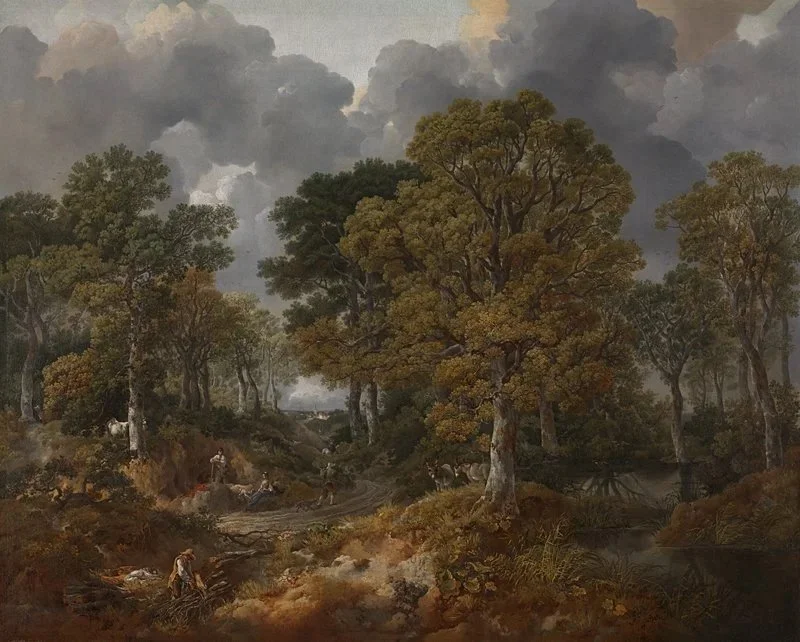
This course introduces students to history as a mode of inquiry and a set of intellectual practices. Through a series of historical case studies, students will learn how historians ask questions, interpret evidence, construct arguments, evaluate competing explanations, and communicate their conclusions. The course emphasizes not only what historians know, but how they think, read, listen, discuss, research, and write.
Students will examine how historical knowledge is produced through the interaction of evidence, interpretation, method, theory, and historiography. They will consider why historians disagree, how assumptions shape historical arguments, and how interpretations change in response to new questions, sources, methods, technologies, and social contexts. Along the way, they will investigate episodes such as the Salem witch trials, the environmental challenges of colonial North America, conflicts over land and the commons in eighteenth-century Britain, and resistance to slavery across the Atlantic world, using each case to develop and practice new historical skills.
The course develops practical competencies in close reading, contextualization, source criticism, note-taking, archival research, citation management, discussion, collaborative inquiry, and evidence-based argumentation. Students will work with varied forms of historical evidence—including documents, testimony, maps, images, environmental records, quantitative datasets, databases, and digital collections—while developing the data literacy needed to locate, evaluate, organize, interpret, visualize, and communicate historical information. They will also assess the strengths and limitations of textual, spatial, quantitative, environmental, and computational approaches.
Throughout the semester, students will repeatedly apply the “Five C’s” of historical thinking: context, causality, change over time, contingency, and complexity. By the end of the course, students will have developed more deliberate habits of historical inquiry, including close attention to evidence, awareness of uncertainty, willingness to question assumptions, consideration of alternative explanations, and the ability to make historically grounded claims. The course is both an introduction to the nature of historical knowledge and a practicum in the methods, skills, data literacy, and dispositions historians use to investigate the past.
Learning Outcomes
This course is designed around two complementary frameworks that describe the knowledge, skills, and habits of mind developed through the study of history.
The IU Indianapolis Profiles of Learning for Undergraduate Success identify four broad capacities that students develop across the undergraduate curriculum: Communicator, Problem Solver, Innovator, and Community Contributor. These profiles describe abilities that support success in advanced study, professional work, and civic life.
The American Historical Association's History Discipline Core (Tuning Project) identifies the distinctive practices of historical inquiry, including working with evidence, interpreting sources, constructing historical arguments, and reflecting critically on how knowledge about the past is produced.
The learning outcomes below reflect both frameworks while emphasizing the practical work of learning to think and work as a historian. By the end of this course, students will be able to:
1. Analyze historical sources and evidence
Analyze primary and secondary sources by identifying their central claims, evidence, historical context, methods, perspectives, and limitations while evaluating the credibility and significance of historical evidence.
IU Indianapolis Profiles
Problem Solver: Collect, evaluate, and synthesize information from multiple sources.
Communicator: Read, listen to, and interpret complex information accurately.
AHA History Discipline Core
Develop Historical Methods: Evaluate historical sources for credibility, perspective, context, and relevance; identify and synthesize historical arguments.
2. Interpret historical problems using multiple forms of evidence
Construct and defend historical interpretations by integrating textual, visual, spatial, quantitative, environmental, and digital evidence. Evaluate how different forms of evidence—including historical datasets and digital resources—shape explanations of context, causality, change over time, contingency, and complexity.
IU Indianapolis Profiles
Problem Solver: Analyze complex problems by evaluating and integrating multiple forms of information, including quantitative and digital evidence.
Innovator: Apply appropriate methods, technologies, and data to investigate challenging questions.
AHA History Discipline Core
Create Historical Arguments and Narratives: Construct well-supported historical interpretations using multiple forms of evidence and explain complex historical processes.
3. Evaluate historical arguments and methods
Compare competing historical interpretations and evaluate how different questions, methods, theoretical perspectives, and forms of evidence produce different understandings of the past.
IU Indianapolis Profiles
Problem Solver: Evaluate alternative explanations and make informed judgments.
Community Contributor: Engage constructively with diverse perspectives while recognizing the complexity of historical and contemporary issues.
AHA History Discipline Core
Develop Historical Methods: Recognize history as an interpretive discipline, evaluate competing historical arguments, and revise interpretations when warranted by evidence.
4. Practice historical inquiry using effective research, data, and knowledge-management strategies
Develop and maintain an organized record of historical inquiry by taking effective notes, documenting sources, managing citations and research materials, organizing and interpreting historical data, and connecting evidence across readings, discussions, classroom activities, and field experiences.
IU Indianapolis Profiles
Communicator: Organize, document, and communicate information clearly and effectively.
Innovator: Develop sustainable workflows, use digital tools and data responsibly, and improve practices through reflection and revision.
AHA History Discipline Core
Develop Historical Methods: Collect, organize, question, synthesize, interpret, and ethically document historical evidence.
5. Reflect on and transfer historical practice
Evaluate the development of your historical thinking and explain how the methods, skills, data literacy, and dispositions practiced in this course can be applied to new historical questions, other academic disciplines, professional settings, and civic life.
IU Indianapolis Profiles
Innovator: Adapt knowledge and skills to new contexts through reflection and continual learning.
Community Contributor: Apply informed judgment and historical perspective to collaborative work and civic engagement.
AHA History Discipline Core
Develop Historical Methods: Recognize the provisional nature of historical knowledge, revise interpretations in response to new evidence, and apply historical thinking beyond the history classroom.
Assessment of Learning Outcomes
Learning outcomes are assessed throughout the semester through reading notes, classroom discussions, source analyses, case studies, classroom exercises, and module reflections. Your Digital Course Notebook serves as the primary record of your development as a historian. Through your notes, source analyses, data work, classroom activities, revisions, and reflections, you will document not only what you learned but also how your historical thinking, research practices, data literacy, communication, and professional habits developed over time.
The Digital Course Notebook functions as both a learning portfolio and the principal assessment of your growth in historical inquiry. It also provides the foundation for reflecting on how the methods, skills, and dispositions developed in this course transfer to future coursework, research projects, internships, professional settings, and civic life. Additional guidance on documenting and communicating that growth appears in the Digital Course Notebook Guide.
Assignments
You will have an assignment nearly every day of this course. The assignment might ask you to read a primary source and take notes on it. Or, it might ask you write up a few questions and bring them to class. Unlike other courses in which you turn in all of your assignments separately, everything that you do for this course will be part of a digital notebook that you develop.
You are expected to deposit all of your notes—including lecture and discussion notes, class activity notes, and reading notes—along with assignments, reflections, and extra-credit work in your Digital Course Notebook and to keep it current throughout the semester. I will review your notebook at the five scheduled grading points listed in the course calendar.
I may also conduct up to two additional Digital Course Notebook checkpoints during the semester. These checkpoints are intended to encourage steady engagement with the notebook and provide additional opportunities to receive credit for keeping your work current. Each checkpoint is worth 50 points and will assess the work that should reasonably have been completed by that point in the course.
For a detailed explanation of the course notebook, templates, grading rubric, etc., see the course notebook guide.
This course follows a seminar format, which means that I expect all of you to actively participate in not only your own learning, but in supporting a scholarly atmosphere of inquiry. You will also be assessed on your classroom participation over the course of the semester, and it will be factored into the grade of your course notebook. Participation will be evaluated on your preparedness for the discussion, your substantive contributions to discussions, and your participation in other classroom activities. It goes without saying that attendance is mandatory and absences will significantly affect your participation grade.
Administrative Withdrawal
A basic requirement of this course is that you will participate in all class meetings and conscientiously complete all required course activities and/or assignments. Keep in touch with me if you are unable to attend, participate, or complete an assignment on time. If you miss more than half of the required activities within the first 25% of the course without contacting me, you may be administratively withdrawn from this course. Our course meets twice per week; thus if you miss more than four classes in the first four weeks, you may be withdrawn.
Administrative withdrawal may have academic, financial, and financial aid implications. Administrative withdrawal will take place after the full refund period, and if you are administratively withdrawn from the course you will not be eligible for a tuition refund. If you have questions about the administrative withdrawal policy at any point during the semester, please contact me.
Grading
I will use points to calculate your final grade. The course begins with 500 possible points, based on five scheduled Digital Course Notebook grading points worth 100 points each.
I may conduct up to two additional Digital Course Notebook checkpoints during the semester. Each checkpoint will be worth 50 points. If a checkpoint occurs, those 50 points will be added both to the total points possible in the course and to the points you may earn. Thus, depending on the number of checkpoints conducted, the course will have a total of 500, 550, or 600 possible points.
These checkpoints are intended to encourage steady work throughout the semester and to give you additional credit for keeping your notebook current. They are not designed as penalties. Instead, they provide opportunities to demonstrate that you are regularly completing and organizing your notes, assignments, reflections, and other course materials rather than assembling the notebook only at the end of a module. Each checkpoint will assess the work that should reasonably have been completed by that point in the course.
You may also earn up to 20 points of extra credit. Extra-credit points are added to the points you earn but do not increase the total points possible.
Course Notebook
Grading Point 1: 100 points
Grading Point 2: 100 points
Grading Point 3: 100 points
Grading Point 4: 100 points
Grading Point 5: 100 points
Notebook Checkpoints: up to 100 points
Extra Credit: up to 40 points
Grades and comments will be posted in Canvas within two weeks of the due date. Since Canvas keeps track of all of your grades, you should always be able to calculate your current grade in the course. If you need assistance, please contact me. All your assignments will count towards your final score. I do not grade on a curve.
Letter GradePercentage RangeA90–100%B+87–89%B83–86%B–80–82%C+77–79%C73–76%C–70–72%D+67–69%D63–66%D–60–62%F0–59%
If you wish to dispute a grade, you should submit your argument in writing within one week of receiving the grade. I will evaluate your arguments and will meet with you to discuss.
Classroom Etiquette
The classroom is a space for learning. Therefore, it is every student’s responsibility to foster a productive educational atmosphere. This means that messaging devices should be turned off and put away unless you obtain special permission from me (e.g. you may need to monitor texts from family members). Use your computer only for taking notes or supplementing the discussion.
If you are late to class, try to make as little a disturbance as possible. If you need to leave early, please inform me before class begins and sit near the door to avoid disturbing your fellow students.
Anything you post online or say in class should conform to the standards of constructive dialogue. Here are a few helpful hints:
Do not dominate any discussion.
Do not use offensive language.
Be cautious in using Internet language. For example, be careful when using ALL CAPS since this suggests shouting.
Never make fun of someone’s ability to communicate.
Share tips with other students.
Keep an “open-mind” and be willing to express your opinion—even if the majority of the class disagrees.
Think and edit before you push the “Send” button.
Using humor is acceptable but be careful that it is not misinterpreted. For example, are you being humorous or sarcastic?
Use correct spelling and grammar.
Be aware of the University’s Academic Honesty Policy.
When in doubt, always ask for clarification.
Adapted from Alma Mintu-Wimsatt, “Netiquette: Make it Part of Your Syllabus,” Journal of Online Learning and Teaching 6, no. 1 (2010), accessed 8 February 2015. http://jolt.merlot.org/vol6no1/mintu-wimsatt_0310.htm (This work is published under a Creative Commons Attribution-Non-Commercial-Share-Alike License.)
Introduction
Sessions
Meeting 1: Introduction: [[m1-intro-nature_of_history|The Nature of History]]
Mon, Aug 24
Module 1: Historical Methods and Historiography
In this foundational module, students will examine the development of history as a discipline and explore how historical interpretation has changed across time and place. The module introduces historiography as the study of how historians construct and debate interpretations of the past.
Students will trace the emergence of professional historical practice, from Renaissance humanism to nineteenth-century positivism and archival history to social, cultural, environmental, postcolonial, and global historiography. The module will challenge the assumption that historiography is solely a Western intellectual tradition by examining diverse approaches to the past, including Chinese dynastic history, Islamic historical writing, oral traditions, and Indigenous historical knowledge systems.
Alongside lectures and readings, students will be introduced to practical systems for organizing historical research, including Zotero, note-taking methods, and the intellectual workflows. The goal is to establish both conceptual and practical foundations for the rest of the course.
Sessions
Meeting 2: Historiography and The 5(?) C's of Historical Thinking
Wed, Aug 26
Read / Listen
Podcast: Introducting Historiography
Burke, Flannery, and Thomas Andrews. “What Does It Mean to Think Historically? – AHA.” Perspectvies in History, January 1, 2007. https://www.historians.org/perspectives-article/what-does-it-mean-to-think-historically-january-2007/.
Meeting 3: Reading Like a Historian
Mon, Aug 31
Read / Listen
Podcast: Primary Sources
Meeting 4: Note-Taking
Wed, Sep 2
Watch
Tropy. Getting Started in Tropy. 2021. 5:41. https://www.youtube.com/watch?v=jqTkI49JUDA.
Meeting 5: Field Trip to Indiana Historical Society
Wed, Sep 9
Grading Point 1: Review of Digital Course Notebooks (Sep 9)
Module 2: Salem Witch Trials: Gender, Space, and Power
This module examines the Salem Witch Trials as a case study in historical interpretation and methodology. The module introduces students to the use of legal records and personal testimonies. The module also introduces how interpretations of Salem have shifted over time, moving from explanations rooted in irrationality or mass hysteria to complex analyses focused on gender, authority, social structure, and local community dynamics.
Sessions
Meeting 6: The Salem Witchcraft Trials
Mon, Sep 14
Meeting 7: The Transatlantic Context
Wed, Sep 16
Meeting 8: Historiographical Debates
Mon, Sep 21
Read
Latner, Richard. “The Long and Short of Salem Witchcraft: Chronology and Collective Violence in 1692.” Journal of Social History 42, no. 1 (2008): 137–56.
Carter, Philippa. “Work, Gender and Witchcraft in Early Modern England.” Gender & History 37, no. 1 (2025): 91–108.
Meeting 9: Method | Close Reading
Wed, Sep 23
Meeting 10: Creating A Digital Timeline
Mon, Sep 28
Meeting 11: Organizing Historical Data
Wed, Sep 30
Grading Point 2: Review of Digital Course Notebooks (Sep 30)
Module 3: Environmental History: The Case of Colonial Maryland
Meeting 12: Environmental History (Online Session)
Mon, Oct 5
Meeting 13: The Little Ice Age
Wed, Oct 7
Read
Kaniewski, David, Nick Marriner, Frédéric Luce, Morgane Escarpe, Majid Pourkerman, and Thierry Otto. “A Climate of Conflict: How the Little Ice Age Sparked Rebellions and Revolutions across Europe (Preprint, Hal-05459112).” Global and Planetary Change 254 (November 2025): 105038.
Meeting 14: Environment and Empire
Mon, Oct 12
Read
Satia, Priya. “The Scholarly Business of Corporations and Slavery: Political Fault Lines of the Economic History of Empire.” Journal of British Studies 64 (2025): 1–27.
Meeting 15: Field Trip to Newfields (Extra Credit)
Fri, Oct 16
Indiana College and University Student Memberships
Students who are currently enrolled in a college, university, or trade school located in Indiana and earning a degree or certificate are eligible for a 1-year complimentary Student membership to Newfields. Benefits of the Student-level follow the Newfields 1-level.
There are two ways to enroll:
Online: Fill out the enrollment form. The Newfields Membership Department will process the request in 2–4 business days.
In-person: Stop by the Efroymson Family Entrance Welcome Desk and a Guest Experiences team member will help you register. Have your student ID ready.
Enroll Online: https://discovernewfields.org/indiana-partner-college-and-university-member-enrollment
Meeting 16: Job Prospects and Transferable Skills
Wed, Oct 21
Grading Point 3: Review of Digital Course Notebooks (Oct 21)
Module 4: Moral Economy, the Commons, and Enclosure
This module examines the concept of the “moral economy” through eighteenth-century food riots, crowd actions, and disputes over prices and subsistence as well as expectations around the "commons" and threats from enclosure. Students will explore how ordinary people understood economic and material fairness and how those understandings conflicted both with traditional claims by the monarch and emerging market theories.
We will begin the module by reading E.P. Thompson's classic work on "The Moral Economy of the English Crowd in the Eighteenth Century." We examine it in relation to the primary sources that is cites and secondary sources that both expand and critique it. We will then explore the historiography of the commons and focus on the case study of the so-called "Pine Tree Riot."
Using petitions, court records, newspapers, pamphlets, and political writing, students will investigate how communities justified collective action. The module introduces students to debates about capitalism, custom, crowd behavior, emotion, and political legitimacy.
Students will also compare historical understandings of economic life with emerging political economy and Enlightenment ideas associated with market systems.
Sessions
Meeting 17: Moral Economy
Mon, Oct 26
Read
Thompson, E. P. “The Moral Economy of the English Crowd in the Eighteenth Century.” Past & Present, no. 50 (1971): 76–136.
Meeting 18: Enclosure and the Commons
Wed, Oct 28
Read
Edward, Alfred, P. A. Brown, and R. H. Tawney, eds. English Economic History: Select Documents. (New York), 1919. PP 523–40.
Thomas Spence, "Property in Land"
Meeting 19: Case Study: The Wellingborough Enclosure
Mon, Nov 2
Meeting 20: Thinking with Theory
Wed, Nov 4
Kerner, Frances. “A New Approach to Understanding Enclosure and Survival of Common Land.” Records of Buckinghamshire 59 (2019): 123–56.
Meeting 21: Case Study: Riots in Essex
Mon, Nov 9
Read
Vincent Brown, Tacky's Revolt, pp. 1–22
Meeting 22: Case Study: Pine Tree Riots
Wed, Nov 11
Read
Roberts, Strother E. “Pines, Profits, and Popular Politics: Responses to the White Pine Acts in the Colonial Connecticut River Valley.” The New England Quarterly 83, no. 1 (2010): 73–101.
Vincent Brown, Tacky's Revolt, pp. 23–52
Meeting 23: Data and AI Literacy
Mon, Nov 16
Read
Vincent Brown, Tacky's Revolt, pp. 53–95
Grading Point 4: Review of Digital Course Notebooks (Nov 16)
Module 5: Resistance in the Transatlantic Slave Trade: Networks, Culture, and Global Impact
This module examines the nature of resistance among Africans and enslaved peoples in the transatlantic world. Students will investigate forms of resistance ranging from shipboard revolts and sabotage to maroon communities and revolutionary movements such as Haiti.
The module emphasizes the agency, cultural practices, and communication networks of enslaved peoples while also situating resistance within broader systems of empire, capitalism, colonial governance, and Atlantic exchange.
Students will work with plantation records, legal documents, travel accounts, revolutionary texts, maps, and visual materials to explore how historians reconstruct resistance and interpret its significance.
Sessions
Meeting 24: Enslavement and Antislavery
Wed, Nov 18
Read
Vincent Brown, Tacky's Revolt, pp. 96–142
Meeting 25: All the Atlantic Mountains Shook
Mon, Nov 23
Read
Vincent Brown, Tacky's Revolt, pp. 143–179
Linebaugh, Peter. “All the Atlantic Mountains Shook.” Labour / Le Travail 10 (October 1982): 87–121.
Meeting 26: Maronage
Mon, Nov 30
Read
Vincent Brown, Tacky's Revolt, pp. 180–224
Meeting 27: Using Data and Databases
Wed, Dec 2
Read
Vincent Brown, Tacky's Revolt, pp. 225–255
Simon Newman. “Popularizing a Database of Resistance: Freedom Seekers in Eighteenth-Century Britain.” The Journal of Slavery and Data Preservation 4, no. 5 (2023): 18–29.
Meeting 28: Transatlantic Revolutions
Mon, Dec 7
Read
Vincent Brown, Tacky's Revolt, pp. 256–270
Meeting 29: Tacky's Revolt
Wed, Dec 9
Discussion of Brown, Vincent. Tacky’s Revolt: The Story of an Atlantic Slave War. Belknap Press, 2022.
Conclusion
Meeting 30: Why Study History?
Mon, Dec 14
Grading Point 5: Review of Digital Course Notebooks (Dec 14)